
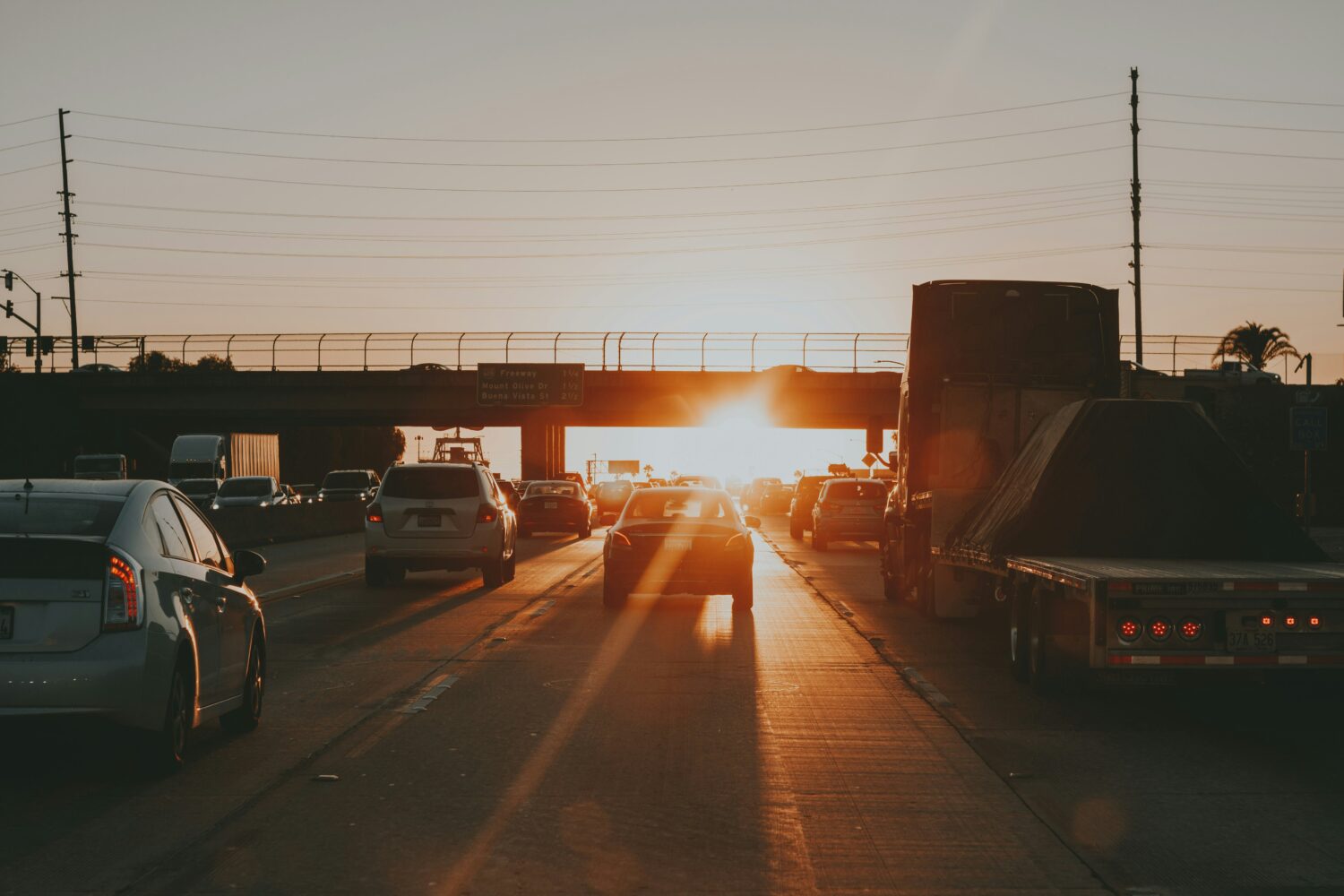
Sun glare is not just an annoyance. NHTSA-linked crash data has attributed roughly 9,000 crashes a year in the United States to sun glare. That number reframes tint. It is not just a cosmetic upgrade. For many drivers, it functions as a safety product that can reduce sun glare during the worst hours of the day.
July makes the problem worse. The longest days of the year push sunrise before 6 a.m. and sunset past 8:30 p.m. That places the sun at a low angle directly in drivers’ eyes during morning and evening commutes, exactly when traffic volume peaks.
Why Low Angle Glare Is More Dangerous
Not all glare behaves the same way. Midday summer glare from overhead sun is uncomfortable, but manageable. Visors block it, and eyes adjust by squinting.
Morning and evening glare works differently. It enters at angles visors cannot intercept and travels straight along the driver’s line of sight. Ophthalmologists distinguish this as disability glare, a temporary state where the eye briefly cannot register what’s in front of it. Discomfort glare makes you squint. Disability glare can mean not seeing a stopped car ahead until it’s too late.
How Tint Actually Works
Tint reduces the amount of visible light passing through glass. A film rated at 35% VLT allows 35% of visible light through, which means it blocks the other 65%, including the intensity that produces glare. That math holds regardless of film brand or type.
Ceramic films add a further benefit: they filter infrared heat and glare-producing light more consistently across the visible spectrum than older dyed films, without darkening the glass as much. The result is lower brightness and less heat, which lets normal eye adaptation handle low-angle sun instead of being overwhelmed by it.
Side Windows Matter Just as Much
Most people think about windshield glare first. Side window glare during turns, lane changes, and intersections is arguably more dangerous, since it hits peripheral vision, which is what catches cross-traffic, pedestrians, and cyclists.
An untinted driver-side window in July morning traffic lets full-intensity low-angle sun in exactly when you’re checking for oncoming cars. Tinted side windows meaningfully cut that exposure.
Legal Limits and the Windshield Strip
States regulate front side window darkness, typically requiring between 35% and 70% VLT depending on the state. Even at the lighter end of that range, a 50% VLT film still cuts glare-producing light intensity in half.
Windshields are treated separately. Most states allow a tinted strip across the top 4 to 6 inches. That strip blocks sun at the exact angle it’s most dangerous during commute hours, and it stays fully legal while doing it.
Tint Plus Polarized Sunglasses
Polarized sunglasses and window tint solve different parts of the problem. Tint lowers the overall light intensity entering the car. Polarized lenses block the horizontally oriented light waves responsible for glare bouncing off pavement and other vehicles.
Together, they cover more ground than either does alone. Drivers who rely only on sunglasses are still taking the full glare load through untinted glass.
Why July Commutes Are the Worst Case
The weeks after July 4th combine the year’s latest sunsets with peak summer traffic. The sun sits above the horizon well into the evening commute, stacking glare exposure onto the most congested hours of the day.
Drivers heading east in the morning and west in the evening get hit both ways. Tint installed now covers the rest of July and carries into August, when the pattern barely changes.
The Cost Argument
A single at-fault crash typically raises insurance premiums for several years afterward, often adding well over a thousand dollars annually depending on the insurer and state. Add a deductible and potential liability exposure, and one glare-related crash can easily outpace the cost of ceramic tint installation, which generally runs $500 to $800.
Framed that way, tint compares favorably to other safety upgrades that get far more attention and cost just as much or more.
Bottom Line
If your commute runs east in the morning or west in the evening during July, you’re driving through the year’s worst glare conditions, twice a day. Window tint won’t eliminate glare completely, but it will reduce sun glare enough to keep it in the range your eyes can actually handle. Combined with a legal windshield strip and polarized sunglasses, it’s one of the more overlooked safety upgrades available for the price. Book an installation before the rest of July’s commute plays out.
Need Car Tinting or Vehicle Upgrades Near You?
Tint Works & Car Audio proudly serves drivers all across Central Ohio — offering expert window tinting, paint protection film, car audio upgrades, remote starters, and more from our single location.
Proudly serving customers from:
Contact us today for a free quote